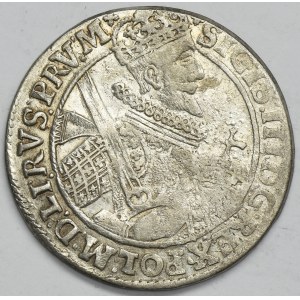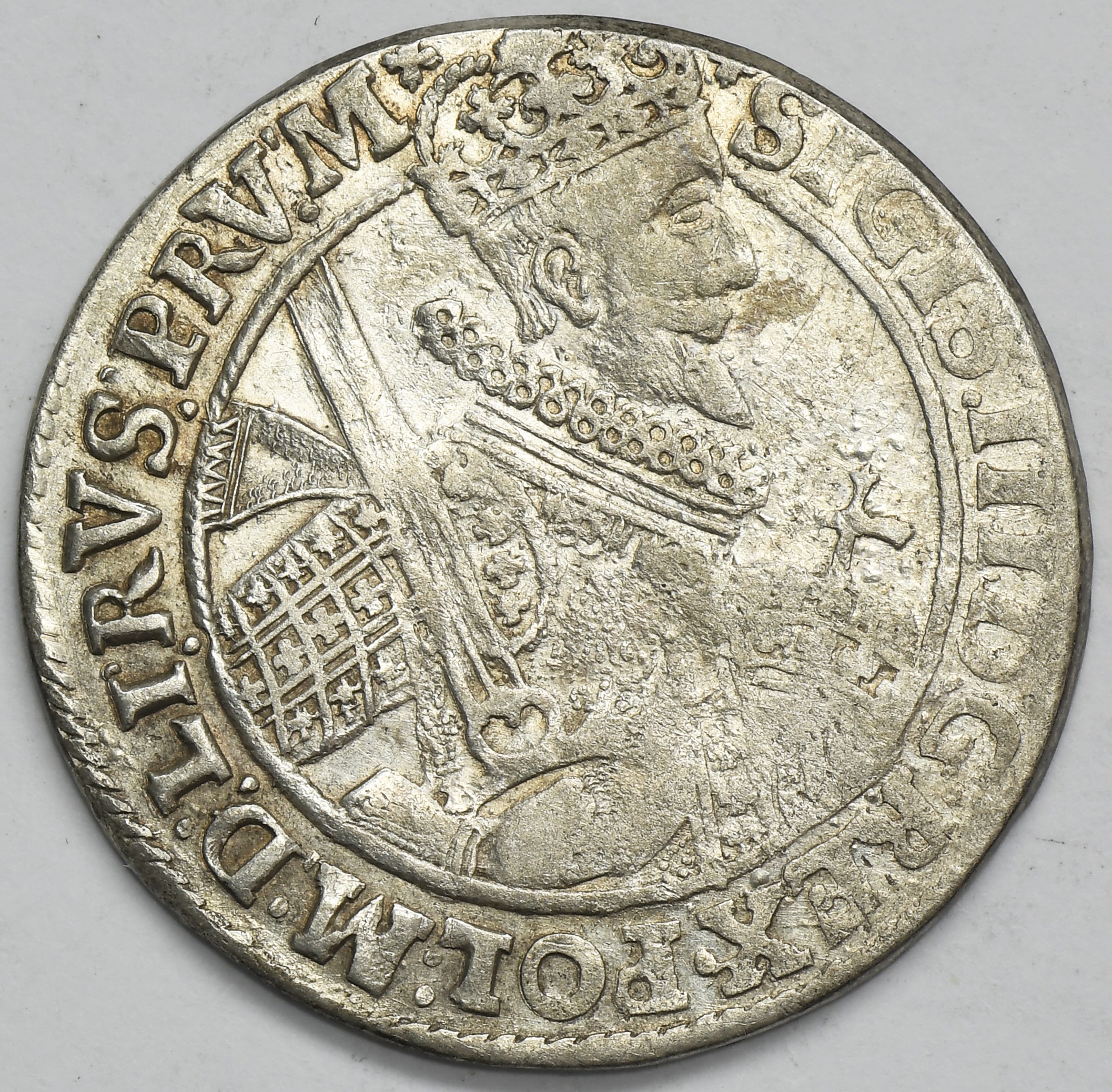
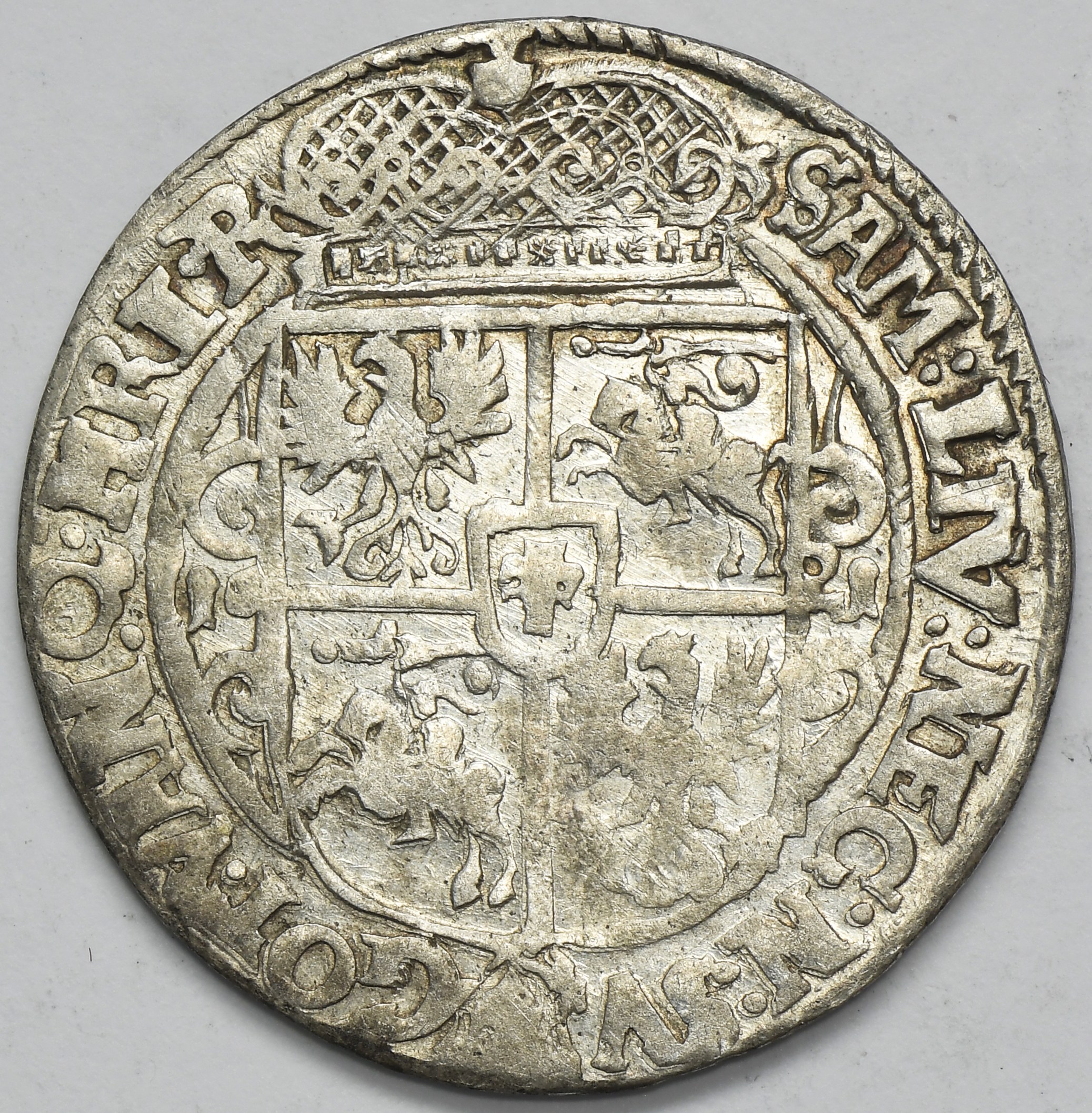
Variety with the ending of the obverse legend PRV M, with reverse legend NEC N SV, with Sas coat of arms on a decorative shield and with strongly curled ornaments on the sides of the coat of arms on the reverse.
Plenty of mint bloom.
The monetary history of the Polish-Lithuanian Commonwealth during the reign of Sigismund Vasa was set against the backdrop of a growing monetary crisis caused by the situation in Germany and the influx of debased German coins into Poland. Initially, the mint rate was determined by Stephen Báthory's ordinance of 1580. As the crisis deepened, a decision was made in 1601 to raise the mint rate, devaluing the denominations in circulation. In subsequent years, further legal acts were passed reducing the silver content of individual denominations. The most important of these was the ordinance of 1623. It introduced a stable monetary system based on the imperial monetary system. During the reign of Sigismund III, new denominations appeared in the Polish-Lithuanian Commonwealth: the 3-krutierz coin, the półkorupi, and the ort. In 1621, the highest denomination in the history of Polish currency, the 100-ducat coin, was minted at the Bydgoszcz Mint. This was the culmination of the intensive issuance of gold coins under Sigismund III. During this period, the Crown Mints (Olkusz, Wschowa, Poznań, Malbork, Bydgoszcz, Lublin, Kraków, and Warsaw), the Lithuanian Mint (Vilnius), the municipal Mints (Gdańsk, Elbląg, Toruń, Riga, Poznań, and Wschowa), and the private mint in Łobżenica operated. Sigismund Vasa's Swedish coins were issued by the mints in Stockholm, Rewal, and Malbork. In 1627, the decision was made to suspend the issuance of small coins. This decision remained in effect until 1650.
The ruler who initiated the issuance of ort coins in Poland was Sigismund Vasa. The first pieces of the new denomination appeared in Gdańsk. In 1608, the mint issued trial ort coins ("initial issue," "specimen coins"), known today in only a few pieces. They exhibit minting characteristics, not embossing like the ort coins of subsequent years. Production of ort coins as circulation coins began in 1609. The name ort ("orth") comes from Old German and means quarter. It referred to the coin's value at the time – ¼ thaler. In 1618, the Crown Mint in Bydgoszcz joined the Gdańsk mint as a producer of ort coins. Ort coins were impressive, initially struck from good, 14th-grade silver. They weighed an average of 6.958 g and contained 6.089 g of pure silver. Due to the monetary crisis that characterized much of Sigismund Vasa's reign, minting regulations changed the standard of ort coins three times. In 1615, it was decided that they would be struck from XIII ½ fine silver, their weight set at 6.726 g, and their pure silver content at 5.676 g. The following year, another change occurred. The standard of ort coins was lowered again (XIII fine, weight 6.427 g, pure silver 5.222 g). In 1621, the final change was introduced (XI fine, weight 7.207 g, pure silver 4.955 g).